Radon Testing and Mitigation in Farmington, MO
Radon is a colorless, odorless gas that can cause lung cancer. Missouri's geology puts many homes at elevated risk. We provide professional testing and mitigation to keep your family safe.
Get a Free EstimateWhat is Radon?
Radon is a naturally occurring radioactive gas that forms when uranium in soil and rock breaks down. It can enter your home through cracks in the foundation, gaps around pipes, and other openings. You cannot see, smell, or taste radon.
The EPA recommends mitigating homes with radon levels at or above 4 pCi/L. Even levels between 2 and 4 pCi/L pose some risk. A mitigation system typically uses a vent pipe and fan to draw radon from beneath the foundation and exhaust it safely above the roofline.
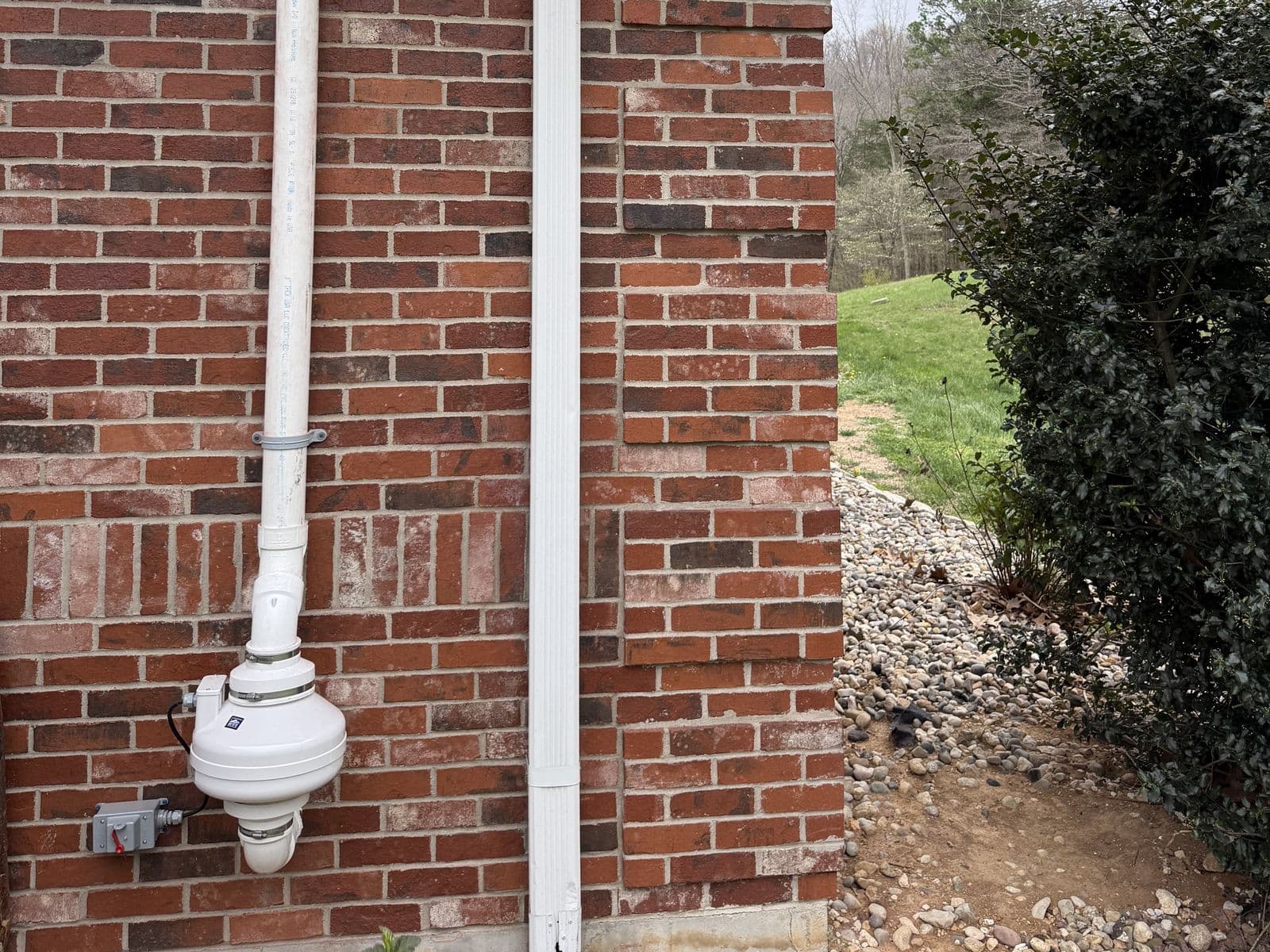
Why Radon Matters in Missouri
4 pCi/LThe EPA level at which mitigation is recommended
Missouri is considered a high-risk state for radon. The state's geology, particularly in areas with limestone and other uranium-bearing rock, can produce elevated radon levels in homes. Saint Francois County and surrounding areas are no exception.
Radon is the second leading cause of lung cancer in the United States. Testing is the only way to know if your home has elevated levels. If it does, mitigation is highly effective at reducing exposure.
Radon Testing in Farmington, MO
We test homes for radon in Farmington and across Saint Francois County. You can't see or smell radon, and two houses on the same street can test very differently, so a test of your own home is the only way to know your level.
If your result is 4 pCi/L or higher, the EPA recommends mitigation, and we can design and install a system for your home. Buying or selling a house? Our home buyers and realtors page explains how testing fits a closing date. For test types, timing and what your number means, read our radon guide for Saint Francois County homeowners.
How Radon Gets Into a New Basement
Through the concrete itself
Concrete is not completely gas-tight. It contains microscopic pores, and radon can diffuse through the slab, especially when there is radon pressure underneath the house.
Through construction joints
A basement slab usually meets the foundation walls at a joint. Even if it looks perfectly sealed, that joint can provide a pathway for soil gas.
Around plumbing penetrations
Water lines, sewer pipes, floor drains, sump pits, and electrical conduits create openings through the slab. These can be extremely small.
Through the sump pit
If a home has a sump basin, the opening underneath the lid can be a significant pathway unless the lid is properly sealed. Even a sealed lid can have penetrations around pipes.
Through the foundation wall
Radon can enter through tiny imperfections, construction joints, mortar joints, utility penetrations, or porous masonry.
Through the soil underneath the slab
This is the big one. Radon is produced naturally as uranium in soil and rock breaks down. The gas accumulates beneath the house and can be pulled into the home when the house has slightly lower air pressure than the soil.
You don't need a visible crack for radon to enter
SoilRadon gasPressure beneath the houseTiny pathwaysBasementLiving space
A brand-new house can actually have higher radon levels than an older house, because newer construction tends to be more tightly sealed, which can increase the pressure difference that pulls soil gas into the building.
That's why radon testing is still recommended in new construction, even when the basement looks absolutely perfect.
Our Process
Testing
We suggest having your home tested. Whether you are using an at-home testing kit or hiring a professional tester, the best place to start is with your test results. We do offer testing, but prefer to use a third-party tester when the mitigation is being done due to a real estate transaction.
Assessment
We evaluate your home's structure and design the right mitigation system for your situation.
Installation
We install the mitigation system, including vent pipe and fan, following EPA guidelines.
Verification
We suggest having your home tested again post mitigation to confirm radon levels are reduced.